What is Procrastination and Why Does It Occur?
Video – VLog #49
What does procrastination mean?
Why do we procrasinate?
What exactly is procrasination?
Script – VLog #49
David Logan: Hi and welcome – Techno Dinosaur Meets The IT Geek. Week 49. Amazing. My name is David Logan, the IT Geek, the guy who takes the jargon out of technology for you the home worker and make it work efficiently.
David Logan: Today I’m based here in the south of Scotland headquarters, Annan, south of Scotland. With me today is Willie Nicol. So, Willie, where are you and how are you?
Willie Nocol: Hi David, I’m very well thank you. I’m here in Troon, South Ayrshire, Scotland, UK.
David Logan: Fantastic. And, for the viewers’ information, if this is your first video, Willie is the Techno Dinosaur and I’m the IT Geek. So, Willie, this week I give you the question. I want to pick your brains, if you’ve got any left. What is procrastination and how can we reduce it?
Willie Nicol: That’s a very good question David. I should perhaps have told the viewers, if there are any first-time viewers there, that apart from being a techno dinosaur, I’m also a personal development life coach
Willie Nicol: So, I help people with procrastination. So, what is procrastination? You can look at dictionaries and find all sorts of definitions and meanings. Essentially, it’s putting stuff off. Generally, stuff that we don’t like doing or can’t be bothered doing, so we procrastinate. If you want to go into a kind of psychological analysis of it, there is a term called conditioned rebellion where we don’t like doing what we’re told. So, in our childhood when we’re told, “go to bed”, “shut up”, “eat your Brussel sprouts”, whatever it was, and our rebellion was, “Naw, I’m not doing it!” So, there’s still an element of that – where we don’t like being told what to do. If we have an objectional task to undertake, we tell ourselves internally, “I need to do that”, “I must do that”. And then the little devil on the other shoulder says, “No don’t bother, it’s boring. You don’t want to be doing that”. And you hum and you haw and eventually it doesn’t get done. Or that job is left to the last minute and it gets done sloppily so you hand in a poor bit of work to your teacher or you do a kind of ‘half-arsed’ job of something. So, the end result is that procrastination causes us to hesitate. Maybe cram things in at the last minute. And the end result is that it’s not done, or it’s not done in a particularly professional manner.
David Logan: Okay. So, procrastination is being like a rebel almost, you totally .…
Willie Nicol: That’s where the term conditioned rebellion comes from. We don’t like being told what to do by other people and by ourselves. And we’ve talked about this before about ‘must’ do something, ‘should’ do something, ‘have to’ do something as opposed to – I will do something, I want to do something. So, if we can flip our mindset that will help us with procrastination. Another thing we talked about in a previous vlog was self-motivation and self-motivation and procrastination are kind of like two sides to one coin.
Willie Nicol: If you’re motivated, you won’t procrastinate, you’ll just get it done. Whereas if you procrastinate, it’s probably a lack of motivation somewhere, for whatever reason – generally, “I don’t like that”, “I’m doing it, it’s boring, it’s dull”’. It’s like I suppose you would say “I’ve got to do my tax return”, or “I’ve got to do my admin”. And you put it off, and you put it off, and you put it off. And I was guilty of this, as other people, not taking head on unpalatable tasks. But there are ways around this. Would you like to hear about these?
David Logan: Yes please.
Willie Nicol: I once asked you the question, “How do you eat an elephant?”
David Logan: Well, firstly my mouth is too small to eat it whole so I would have to break it up.
Willie Nicol: Exactly. You would have to cut it up into small pieces and spend a long time eating the small pieces. So, that unenviable task is like an elephant. You look at it and go, “that’s a big horrible task” and you put it off, you put it off, you put it off. Even though you know it’s got to be done at some point, like your tax return. So if you look at that task and chop it down into manageable pieces it becomes more “palatable”, if I can use a culinary term.
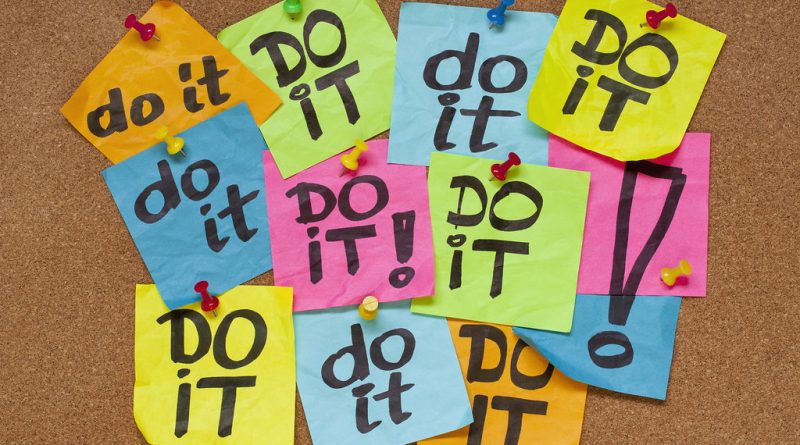
Willie Nicol: Another thing like that formed the basis of a book called ‘Eat That Frog’, right. And the premise behind the book was that the author said – if you’ve got a horrible task you don’t want to really undertake, you look at it as if it’s a frog. And ordinarily you wouldn’t consider eating a frog unless probably you we’re in France where you’d eat their legs. But ‘Eat That Frog’ is a euphemism if you like. Just tackle that unenviable task head on, right. Just get it over and done with – like eating a frog. Get it over and done with and then you can probably move onto more enjoyable stuff, right. Then he says, if you’ve got more than one frog, always eat the biggest one first and then move to the smaller one and so on. So it’s “just do it”, if you like.
Willie Nicol: We also talked during the self-motivation vlog about having a “to do” list and a “will do” list. A “to do” list means you’ve GOT to do it and you make a list of all these things you’ve GOT to do. However, if you right a “will do” list, that’s a slight psychological twist. You think, “I will do it, not I’ve got to do it, I will do it”. So, “to do list”; “will do” list. Another idea is to prioritise your “will do” list and then you might find that actually there’s somethings in this “will do” list I don’t actually need to do. Chop them out. So, by prioritising your “will do” list, chopping off the bits you don’t need; eating the frog or eating the elephant in small pieces, you can cope better with procrastination. It’s all in your mind. “Just do it” as certain coaches would say. Eat the frog, eat the elephant and get it done. And, if anyone has any problems with this, please get in touch with me.
David Logan: Fantastic Willie. Great. Thank you for that. Now I’m a lot clearer what procrastination is, and I guess you can go a lot deeper into the subject. But that’s good for us for today, for this week.
Willie Nicol: You could David. I mean, you go onto websites and they’ll tell you ‘types’ of procrastination and types of people who procrastinate and why they do it and what the solutions are. But that’s a kind of general overview.
David Loagn: Yip. So, to you the viewer, if you’ve got any issues, speak to …. I was going to say the Techno Dinosaur, that’s not your title now. Speak to Willie Nicol, the life coach, if you’ve got any of these issues. Technical? Speak to me or comment down below or send us a private message if you want to keep it confidential.
David Logan: We need more followers though on our social media channels. Get subscribing everybody. Have fun, relax, enjoy yourself. This is going to be goodbye from me for this week. Thank you.
Willie Nicol: Thanks David. You’ve stole my thunder with “have fun”. But to the viewer, stay safe, stay well and keep smiling until the next time. Thank you.
David Logan: Bye.