What is Stress and Causes?
Video – VLog #21
What is stress and what can cause it?
In this video we discuss the causes, symptoms (short-term and long-term) and what YOU can do about it?
Script – VLog #21
David Logan: Hi, my name is David Logan, the IT Geek taking the jargon out of technology. I’m based here in Annan, Southwest Scotland, United Kingdom. Here on a sunny day here today to record video number 21 with our co-host Willie Nicol, our “Techno Dinosaur”. So Willie, how are you and where are you?
Willie Nicol: Hi, David. I’m very well, thanks. I am Willie Nicol, the life coach, also known as AKA, the Techno Dinosaur. And I’m based near Troon in South Ayrshire, Scotland UK.
David Logan: Brilliant. So today Willie , today’s question is. What is stress and what can cause it?
Willie Nicol: A very good question. David, we have alluded to stress and related matters in other previous videos, but I will start again from scratch as it were. Stress is a perfect normal part of life. Stress is the body’s reaction to any changes around about them, which requires some sort of response. So when circumstances change around about you, your body reacts. If it’s a stressful situation – there is the fight or flight response, which I’ve alluded to earlier, but stress normally is OK. It keeps you alert, keeps you motivated, makes you ready for danger, ready for anything. Once the stressful situation disappears, everything is fine. The flip side, however, is the repeated the constant exposure to stressful situations can affect us physically, emotionally and mentally. Now, the science behind this is what we discussed before. The fight or flight response is if you’re faced with danger, your body automatically kicks in with a response. Floods yourself with adrenaline. Which makes your heart faster, which makes your sight more acute, makes you ready to either run or fight. Another chemical is cortisol, and its function is to suppress bodily functions that are not required for fight or flight. So, for example, suppression of immune system or your digestive system, because these are not required for fight or flight. However, as I said, under normal circumstances, the stress disappears, these chemicals go back to normal it will be fine. Repeated exposure to stress, however, means these chemicals remain elevated in our bodies, and that’s not good a thing. So exposure to stress constantly is a bad thing.
David Logan: OK, so what causes stress?
Willie Nicol: Well, I think we all know in periods of stress that we’ve been stressed, how long is a piece of string? It could be a very important work deadline, or fall-out with a friend, road rage, or for example, with me when my tech doesn’t work. So there’s all sorts of a situation which you could feel stressed and it can vary from person to person. One person will get stressed about this, and the other won’t and so on. So what causes it? It can be a myriad of things.
David Logan: Good. Can you explain going deeper, what other symptoms of stress? Is it getting temperature? Is it shaking?
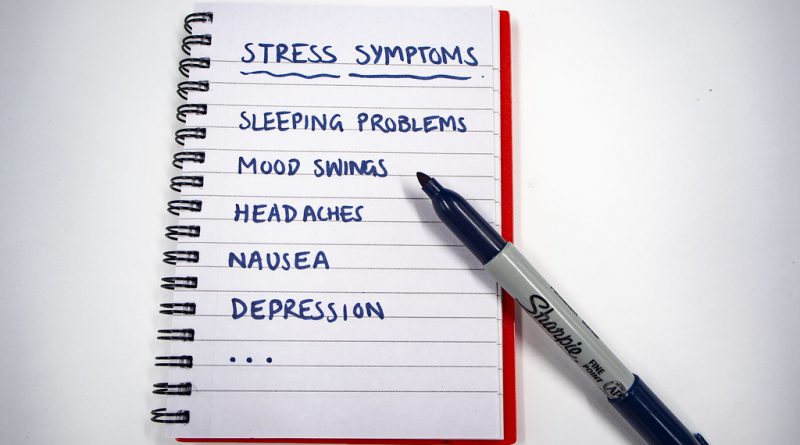
Wilie Nicol: Well, as I said before, excess stress can affect us emotionally, mentally and physically. Emotionally, we can feel overwhelmed, anxious. A bit fuddled. Mentally we can feel ourselves, I’m going to use the word “frazzled”. And I think you’ll know what that means. Where you’re frazzled. You’re uptight. You’re, again anxious, possibly afraid, possibly stuck, like a rabbit in the headlights, not knowing what to do. Physically, as I kinda touched upon before, we can feel nausea, dizziness, a tightness in our chest, rapid heartbeat and I think most of us know what the symptoms are. They’re a bit unpleasant, so these are a very good indication, so you say to yourself – “Wait a minute I’m stressed now – I need to do something about it.” So these are kind of basic symptoms.
David Logan: And what if this is left unattended and it goes on long term, what’s the onset of that?
Wllie Nicol: Well for prolonged periods of stress or repetitive types of stress and an inability to address these efficiently. As I’ve said the adrenaline will make your heart pump faster, and no one wants a racing heart all the time. The cortisol might affect certain functions within your body, which if it is repeated, or constant , can give you all sorts of things. You can go online and find out all sorts of data excess stress can lead to mental problems that can lead to emotional problems, fear, worry, anxiety and the physical problems of things like as serious as heart attacks and gastric problems, all sorts of potentially very unpleasant physical side effects caused by overexposure to stress.
David Logan: OK, so, I know we’ve probably covered this just very quickly, how can we recover? How can we relieve the stress?
Willie Nicol: Yes, we have touched on this before. I think video number three and four perhaps, because we’ve come so far, it’s becoming more difficult to remember. But there are certainly a number of self-help steps you can take. And I’m going to put them in a kind of ascending order, if you like, the first one is talking to someone, talking to a trusted friend or relative. As the old saying a problem shared is a problem halved. And sometimes just talking to someone can bring your stress levels down, you feel better. We also talked about breathing exercises, where you can do breathing exercises, which calm you down because you’ve heard the saying “When people are stressed – take a deep breath.”
Willie Nicol: And just the fact of taking a deep breath can break that stress autopilot mode your in, where it’s stress stress stress. I said take a deep breath and break the cycle as it were. We also touched on exercise, which stimulates the production of endorphins. Our body feel good chemicals. Then we went on to mindfulness, which is possibly associated a very often associated with breathing, where you just sit in the moment, break that cycle of stress and chill.
Willie Nicol: Follow on from that meditation. You don’t have to sit cross-legged, make a funny noise, you can just go somewhere quiet and try and calm your head down. Then you can seek interventions, for example, hypnotherapy, which I practice and take it from there.
Willie Nicol: However, if all of these self-help things don’t work – don’t ignore it, don’t think your stress is just going to go away by itself. If you’ve tried all these solutions and they haven’t hit the mark go and see a therapist, go and see your GP, go and see someone because the long term effects of stress, and you can find this online, can end up being fatal. However, that’s a bit doom and gloom, and we don’t want to go there. Yes, so in summation. Stress is normal. A bit of stress is good for you. Excessive or prolonged or repetitive exposure to stress isn’t. I hope that’s been useful.
David Logan: Great. Thank you Willie. That’ll do good for this week, think we’re up to the time here now. So to the viewer, if you feel stressed or your struggling as Willie says don’t keep it all in here, speak to somebody.
David Logan: Find out how go for help, even just having a coffee with somebody, or phone either of us, have a video call, we will not bite you.
David Logan: To the viewer tho, thank you for watching. As always, we are asking you to go onto our channels. Feel free to reach out to us on these channels, social media LinkedIn, Twitter, Facebook, YouTube. Videos are uploaded every week. We’re looking for our hundredth subscriber now. We’re getting more each week. Willie has a prize for you that will come apparent when we get to 100 subscribers. So for now, have a good weekend from myself and Willie. Thank you.
Willie Nicol: Thank you, David. Yes to everyone, have a good weekend and once again, keep will stay safe. Have fun. Cheers now.